

December 16, 2025
Open-Source AI Models in 2025: Running Llama, Mistral, and Nemotron on Your Own Hardware
In late 2025, open-source large language models (LLMs) have reached unprecedented levels of performance, privacy, and accessibility.
Read more

Stay up-to-date on the latest tech news
In late 2025, Fortinet and its flagship FortiGate next-generation firewalls (NGFWs) dominate enterprise cybersecurity discussions.
.jpg)
In late 2025, open-source large language models (LLMs) have reached unprecedented levels of performance, privacy, and accessibility.
.jpg)
In late 2025, amid skyrocketing demand for AI infrastructure and persistent component shortages, many businesses face a dilemma: invest in expensive new AI-optimized servers or adapt existing ("old" or legacy) hardware?
.jpg)
In 2025, artificial intelligence fundamentally transforms server design and operation. Traditional CPU-centric servers give way to AI-optimized architectures with integrated accelerators, advanced cooling, and rack-scale systems to meet generative AI and machine learning demands.
.jpg)
On December 15, 2025, Nvidia announced its acquisition of SchedMD, the primary developer behind Slurm—the world's most widely used open-source workload manager for high-performance computing (HPC).
.jpg)
Google DeepMind announced a groundbreaking partnership with the UK government through a non-binding Memorandum of Understanding (MoU).
.jpg)
In late 2025, global spending on core IT—hardware, software, and services—has surged by 14%, marking the fastest annual growth rate in nearly 30 years since the 1996 dot-com boom, according to IDC's Worldwide Black Book.
.jpg)
Will this crisis stay limited to memory and storage, or spread to other PC and server components like GPUs, CPUs, or even power supplies? Industry forecasts point to yes.
.jpg)
A recent congressional report highlights over 54,000 AI-related job losses this year alone, fueling calls for transparency and worker protections.
.jpg)
On December 11, 2025, President Donald Trump signed a groundbreaking executive order aimed at curbing state-level AI regulations, establishing a unified national framework to boost American leadership in artificial intelligence.
.jpg)
With RAM and SSD prices soaring in late 2025, discover why refurbished servers like Dell PowerEdge R750 and HPE ProLiant DL380 remain a smart, cost-effective choice – saving 50-80% while delivering reliable performance.
.jpg)
Ransomware attacks aren't slowing down—they're evolving. In 2025 alone, UK businesses faced over 1.2 million incidents, with average recovery costs hitting £1.5 million per breach.
.jpg)
As 2026 unfolds, UK small and medium-sized businesses (SMBs) are staring down the barrel of an unprecedented cyber threat landscape.
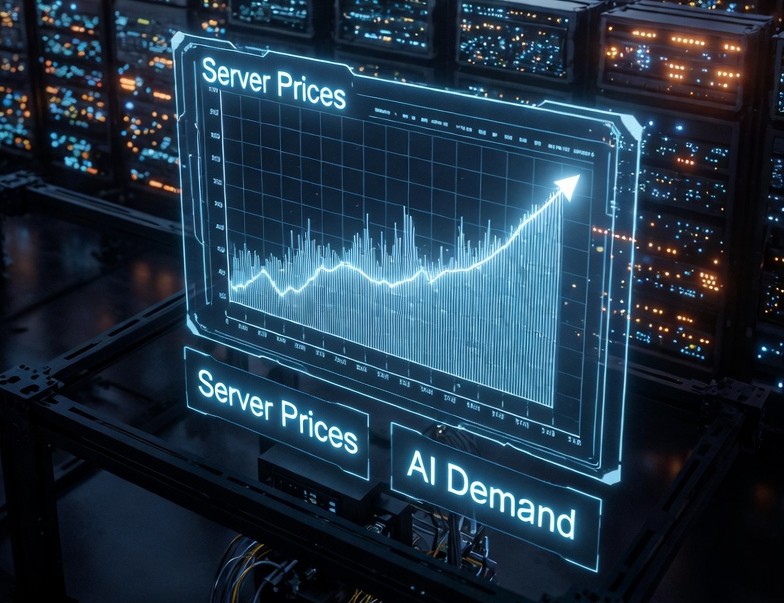
As we head into the final weeks of 2025, UK IT decision-makers are grappling with significant price increases for enterprise servers and storage.
.jpg)
Artificial intelligence is no longer a “nice-to-have”. Gartner predicts that by 2027, 80% of enterprises will be using generative AI in production — up from under 5% in 2023. The gap between early adopters and laggards is widening fast.
.jpg)
Choosing an IT reseller like Servnet over going direct to Microsoft, Dell or Cisco saves UK businesses 10–30%, cuts admin and delivers expert support. Discover why in 2025.
.jpg)
The explosive growth of artificial intelligence is unleashing a "memory pandemic" reminiscent of the 2021 chip crisis, forcing enterprises worldwide to scramble for scarce servers, SSDs, DRAM modules, and even basic laptops.
.jpg)
President Donald Trump announced late Monday that Nvidia will immediately be allowed to export its advanced H200 AI accelerators to pre-approved commercial customers in China.
.jpg)
The 2025 RAM crisis is hitting UK businesses where it hurts most: the IT budget.

Searching for what is Microsoft Copilot? In 2025, it's no longer just a chatbot—it's an AI powerhouse woven into Windows, Microsoft 365, and beyond, promising to supercharge your workday.
Searching for the best AI laptop 2025? Every brand is screaming “AI-powered”, but most are just slapping a 40+ TOPS NPU sticker on last year’s hardware and charging £300 extra.
.jpg)
Crucial is shutting down in 2026 – the iconic consumer RAM and SSD brand that powered millions of PC upgrades for nearly three decades is being axed.
.jpg)
The RAM shortage was just the appetizer. Now, the main course of pain is hitting: NAND flash, the silicon heart of your SSDs, USB drives, and SD cards, is facing a supply Armageddon courtesy of AI data centers.
.jpg)
In a move that's sending shockwaves through the PC enthusiast community, Micron Technology—the memory behemoth behind the beloved Crucial brand—has announced it's pulling the plug on its consumer-facing operations.
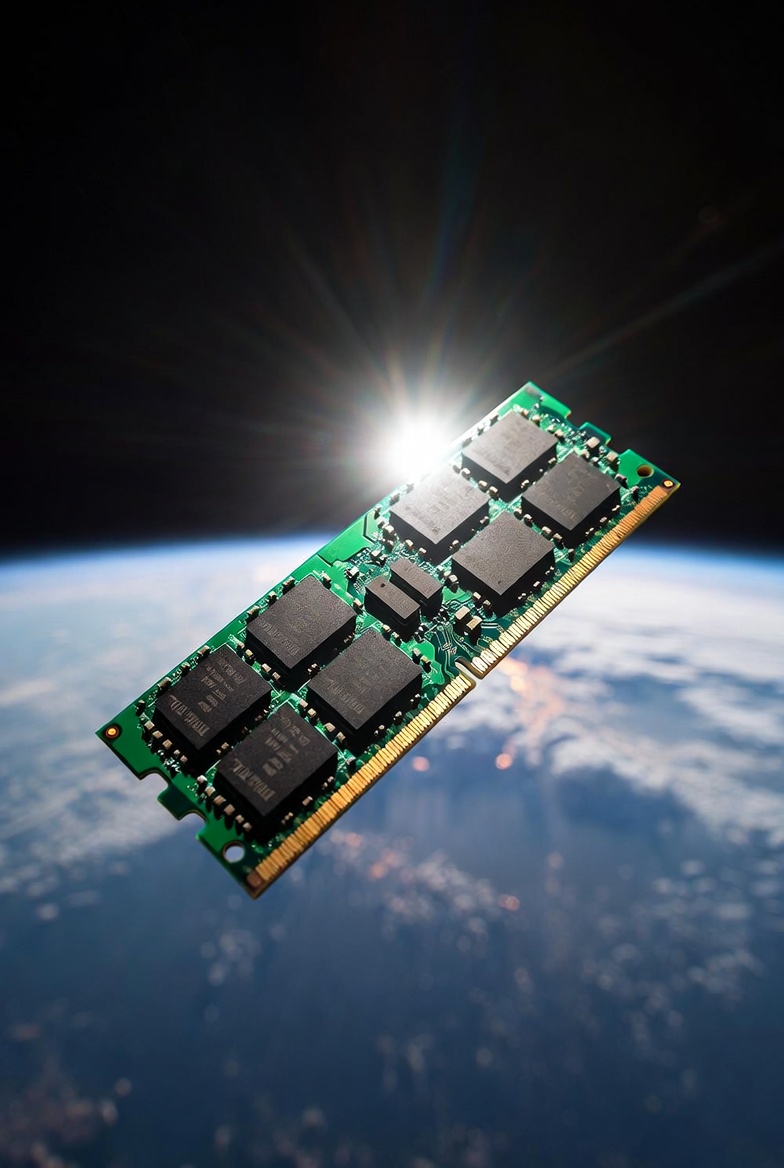
In the glittering race to build the future of artificial intelligence, a quiet crisis is unfolding in the shadows of server farms and chip fabs.
Hewlett Packard Enterprise (HPE) has once again set a new benchmark in enterprise computing with the launch of its latest ProLiant Gen12 servers. Designed for businesses seeking advanced security, AI-driven automation, and unparalleled performance, these new servers are poised to redefine data center efficiency.

Artificial intelligence (AI) has become a cornerstone of modern technology, driving innovation in healthcare, finance, transportation, and countless other sectors. However, as AI systems become more pervasive, their security has emerged as a critical concern. Without robust safeguards, AI systems are vulnerable to threats that could compromise their integrity, reliability, and ethical use.

In today’s digital world, data centers are the engines driving innovation, connectivity, and progress. They power everything from cloud computing to AI and IoT. However, this technological backbone comes with a significant environmental cost. As data demand grows, so does the need for sustainable practices, making the shift toward carbon neutrality in data centers more critical than ever.

As data centers evolve to handle the immense demands of artificial intelligence (AI) workloads, NVMe (Non-Volatile Memory Express) has emerged as a critical technology. Its unparalleled speed, scalability, and efficiency make it indispensable for modern computing environments where high-performance storage is non-negotiable.

As businesses increasingly rely on the cloud, many have experienced firsthand the flexibility and scalability cloud environments offer. But a new trend—cloud repatriation—is emerging, where organizations are moving some workloads back to on-premises or hybrid environments.

Artificial intelligence (AI) is transforming industries withits ability to process vast amounts of data quickly. However, this surge in AIapplications has also contributed to rising costs for storage hardware likehard drives (HDDs) and solid-state drives (SSDs).

In today’s digital era, the demand for agile, scalable, and cost-efficient IT services has never been higher. Traditional on-premises data centers often struggle to keep up with this pace, leading organizations to embrace the flexibility of cloud computing. However, moving operations to the public cloud isn’t always feasible or desirable for every business. Enter HPE GreenLake, a revolutionary solution that brings the cloud to you. But how exactly is HPE GreenLake transforming IT? Let’s dive in.


